GojuKai Masters
Gōgen Yamaguchi Kaiso
Founder of the International Karate-Do Goju-Kai Association (1909–1989)
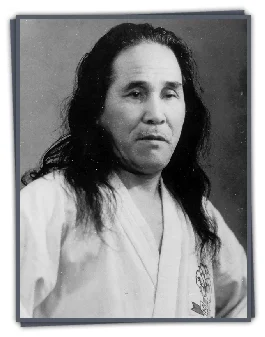
- Founder, International Karate-Do Goju-Kai Association (IKGA)
- Student of Gōjū-ryū under Chōjun Miyagi
- Ranjū-Hōshō (Blue Ribbon Medal, fifth order of merit), awarded by the Emperor of Japan in 1968
- Unified Japan’s karate schools as F.A.J.K.O. in 1964
- Shihan of the Kokusai Budō Renmei karate-dō division
Gōgen Yamaguchi Kaiso (Jitsumi Gōgen Yamaguchi, 山口剛玄; 20 January 1909 – 20 May 1989) was a Japanese martial artist and the founder of the International Karate-Do Goju-Kai Association (IKGA). He was one of the best-known karate-dō masters to come out of Japan.
Training and lineage
Yamaguchi Kaiso studied Gōjū-ryū karate under Chōjun Miyagi. He added the Taikyoku kata to the Gōjū system, giving beginners a set of training forms to prepare them for the more advanced kata.
Recognition
In 1968 the Emperor of Japan decorated him with the Ranjū-Hōshō, the Blue Ribbon Medal of the fifth order of merit, for his enormous contribution to spreading the Japanese martial arts around the world. For many years he was listed in the Guinness Book of Records for his rank and achievements. As one obituary put it, “His name was a household word in Karate circles, and he appeared in all the major Martial Arts magazines and publications, both in Japan and the western world.”
Building Gōjū-kai worldwide
Yamaguchi Kaiso unified the karate schools of Japan into a single union, which became the Federation of All Japan Karate-dō Organization (F.A.J.K.O.) in 1964. The Kokusai Budō Renmei (International Martial Arts Federation), chaired by Prince Higashikuni of the Japanese Imperial Family, appointed him Shihan of its karate-dō division.
Under his leadership the IKGA grew and thrived, in Japan and across Asia and the Western world. By 2008, Gōjū-kai karate-dō principles and training methods were taught in about 60–70 countries.
Legacy
His contribution to Gōjū-ryū and to karate-dō as a whole has been enormous. In the words of Ingo de Jong (Goju-Kai Karate-do: Hard and Soft in Harmony, 1989), “never before has a single man had such profound effect on the development and propagation of karate-dō”.